
University of Buea, EITI Push for Better Media Coverage of Cameroon’s Extractive Sector
Journalists and students have been challenged to pay greater attention to Cameroon’s extractive industries, amid concerns that limited public awareness of the management of the country’s oil, gas and mineral resources is weakening public understanding of the sector.
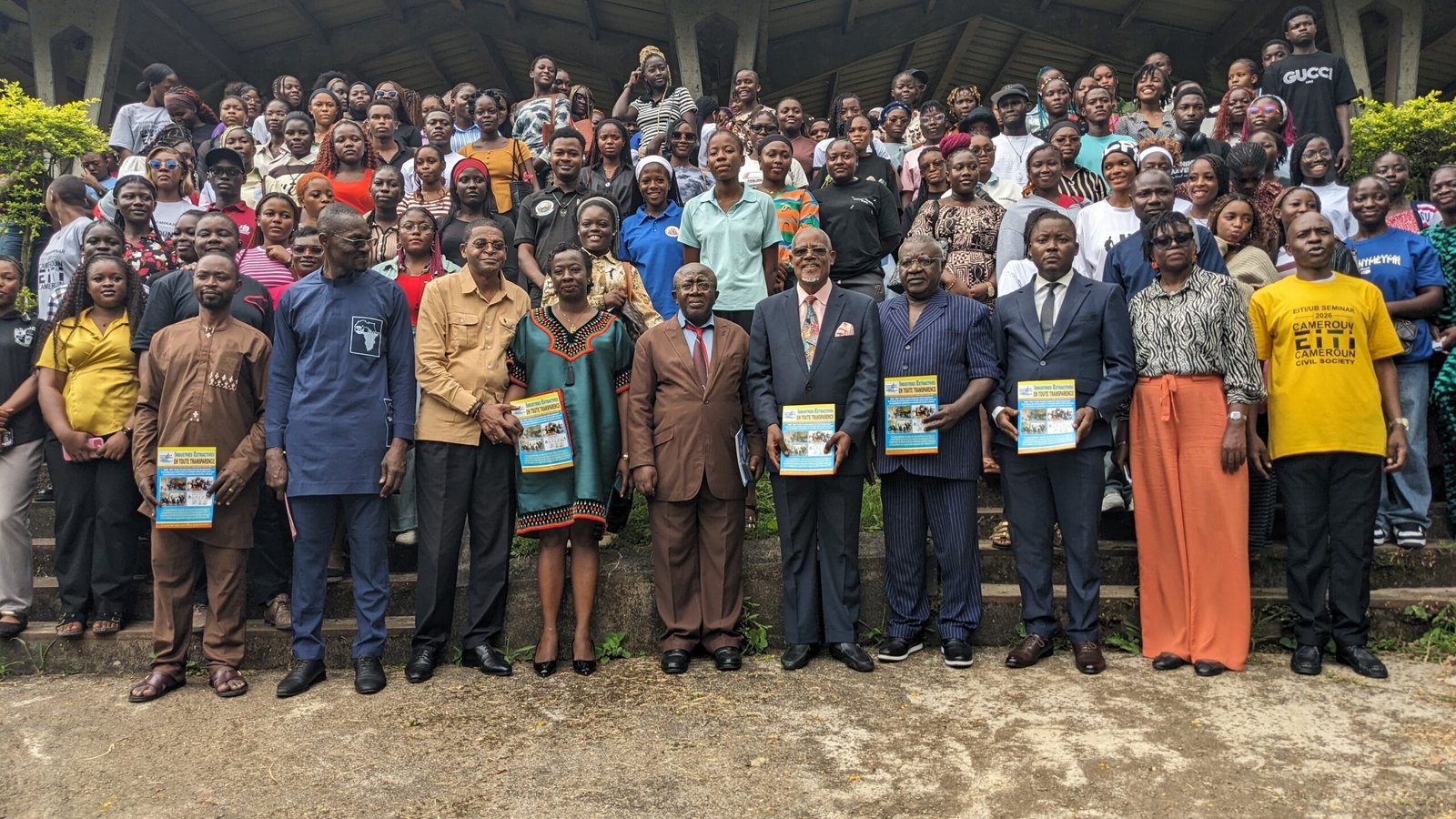
The call was made during a one-day seminar held on Wednesday, November 4, at Amphi 150 D of the University of Buea. Organised under the theme “Communication Challenges,” the event brought together academics, civil society representatives and students from the university’s Departments of Journalism and Mass Communication and Geology.
The seminar focused on improving public understanding of the Extractive Industries Transparency Initiative (EITI) and encouraging journalists to report more consistently on the management of natural resources.
Convened by University of Buea alumnus Dr Blasius Ngome, President of the Multi-Stakeholder Group’s Communication Committee, the event also provided an opportunity to encourage students to explore EITI and the extractive sector through academic research, including long essays and postgraduate dissertations.
Dr Ngome highlighted what he described as a significant information gap among Cameroonians. Referring to a vox pop survey he conducted, he said approximately 85 per cent of respondents were unfamiliar with EITI, while about 10 per cent knew about the initiative.
He said the findings reinforced the need to equip journalists and civil society actors with the knowledge required to explain the initiative and make information about the country’s natural resources more accessible to the public.A former Director of Communication at the National Refining Company (SONARA), Dr Ngome also addressed public expectations surrounding the benefits of natural resource extraction.
He explained that the benefits should not be understood simply as direct cash payments to citizens, but through the use of revenues from the sector to finance national development.
According to him, proceeds from extractive activities should be channelled into the national budget, where they can support projects and services intended to benefit the wider population.
The Dean of the Faculty of Social and Management Sciences, Professor Emmanuel Yenshu, welcomed the organisers for selecting the faculty to host the maiden seminar. He encouraged students to take an interest in the extractive industries, describing the sector as an area with opportunities for research and professional engagement.
Professor Yenshu also stressed that university students should seek practical experience throughout their studies rather than waiting until formal internship periods.
He said regular exposure to professional environments would help prepare them for the demands of the labour market.For Journalism and Mass Communication students, the discussions highlighted the growing importance of specialised reporting.
In her presentation titled “Communication Challenges for Students of Journalism and Mass Communication,” the Head of Department, Dr Nengieh Lizzie Wantchami, urged students to develop expertise in specific areas of journalism instead of relying solely on general training.
She explained that specialised knowledge could expand research opportunities, strengthen reporting skills and help graduates establish themselves in particular fields.
Dr Wantchami said the seminar was organised to familiarise students with the technical issues surrounding natural resource extraction and prepare them to report on the sector before entering the professional world.
Another presentation, delivered by Professor Andrew Edjua, examined “EITI Classification as a Corporate Institution.” His contribution focused on the relationship between institutions operating in the extractive sector, corporate social responsibility and public accountability.
Professor Edjua emphasised the importance of legitimacy and acceptance between institutions and the communities in which they operate, warning that a lack of public trust could create tensions.
Participants were also introduced to the institutional structure of EITI in Cameroon. The initiative is headed by the Minister of Finance, Louis Paul Motaze, with the interim Minister of Mines, Professor Calistus Gentry, serving as deputy.
EITI is an international standard designed to promote transparency and accountability in the management of oil, gas and mineral resources. It seeks to make information available across the extractive value chain, including how resources are managed and the revenues generated from their exploitation.
More than 50 countries across Africa, Europe, the Americas and Asia are implementing the standard. At the international level, its implementation is overseen by a board of directors and a secretariat based in Oslo, Norway.
The University of Buea seminar brought together academics, students and civil society actors around the need to improve public access to information about Cameroon’s natural resources.
Organisers expressed hope that stronger media engagement, specialised reporting and academic research would help citizens better understand the extractive sector and how revenues from it can contribute to national development.